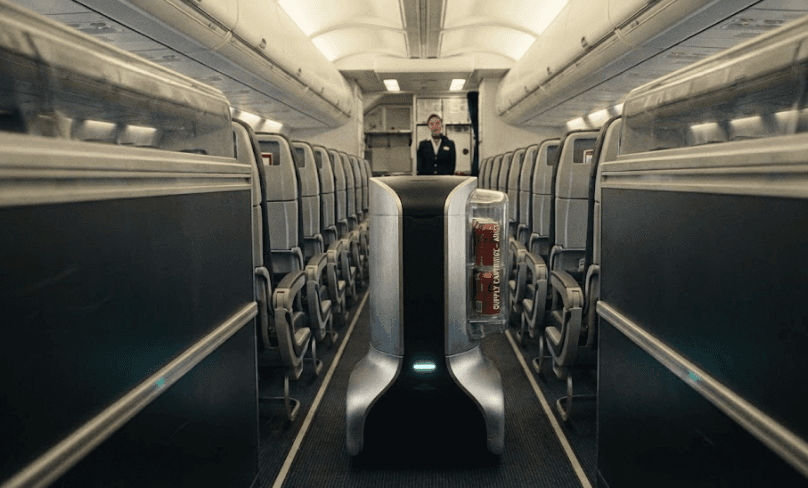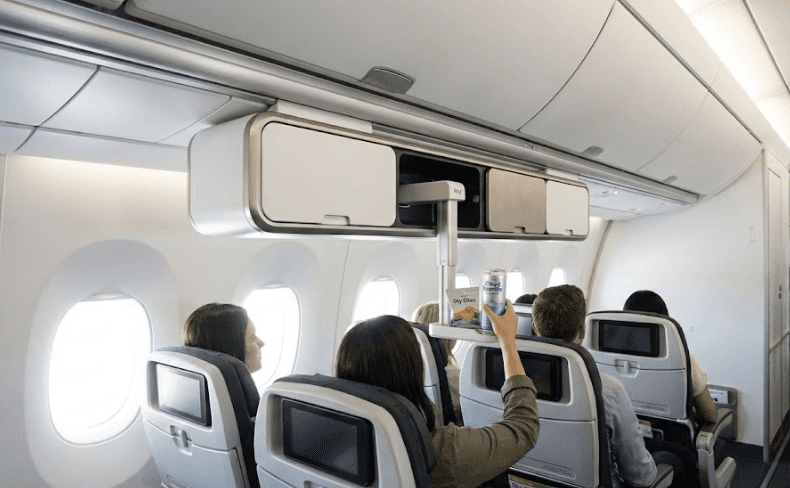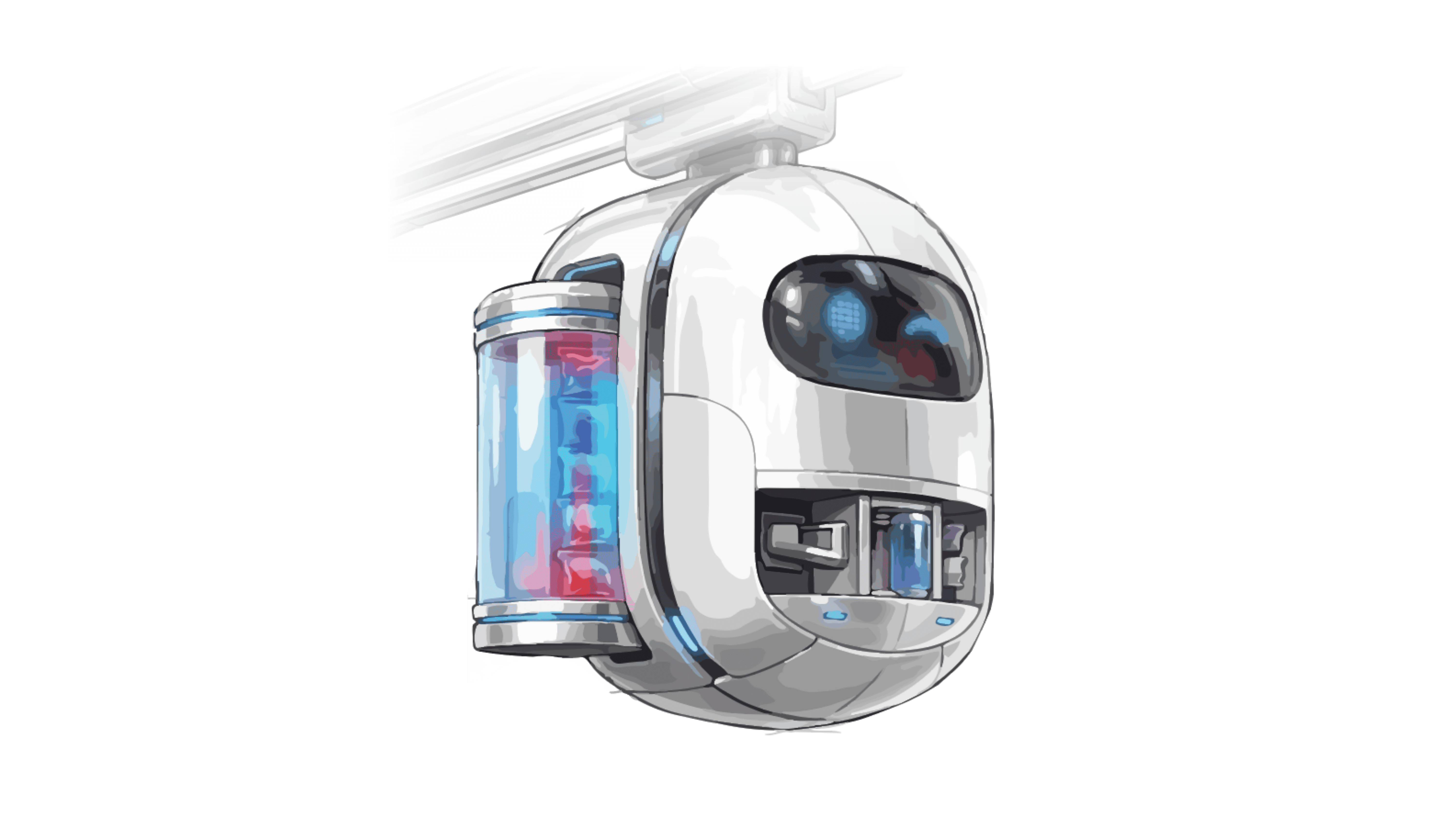
It started on a bumpy flight to Miami. Turbulence kept the flight attendants buckled in, leaving the cabin unserved for hours. I filed that frustration away as a user pain point until we landed. Walking through Miami, I was surrounded by autonomous food delivery bots, and the inspiration clicked. I realized we could adapt that technology to solve the in-flight service gap—and that is where Ariel was born.
Understanding the Challenge
The commercial aviation industry faces a demographic cliff, with a projected shortfall of 678,000 cabin crew members by 2034. Existing solutions often rely on "humanoid" robots, but my research into the physics of flight revealed a critical flaw: bipedal robots are unstable in turbulence and require massive battery density to remain upright. The challenge was to design a system that respects the non-inertial frame of an aircraft while solving the ergonomic hazards of pushing 100kg service carts.
Deconstructing an Attendant
To create a viable solution, I focused on "unbundling" the flight attendant's duties. The role is effectively two jobs: high-frequency logistics (service) and high-stakes emergency management (safety). Ariel was designed to automate the heavy lifting of the service function, allowing airlines to operate with leaner human crews who are physically rested and mentally focused exclusively on safety and security monitoring.
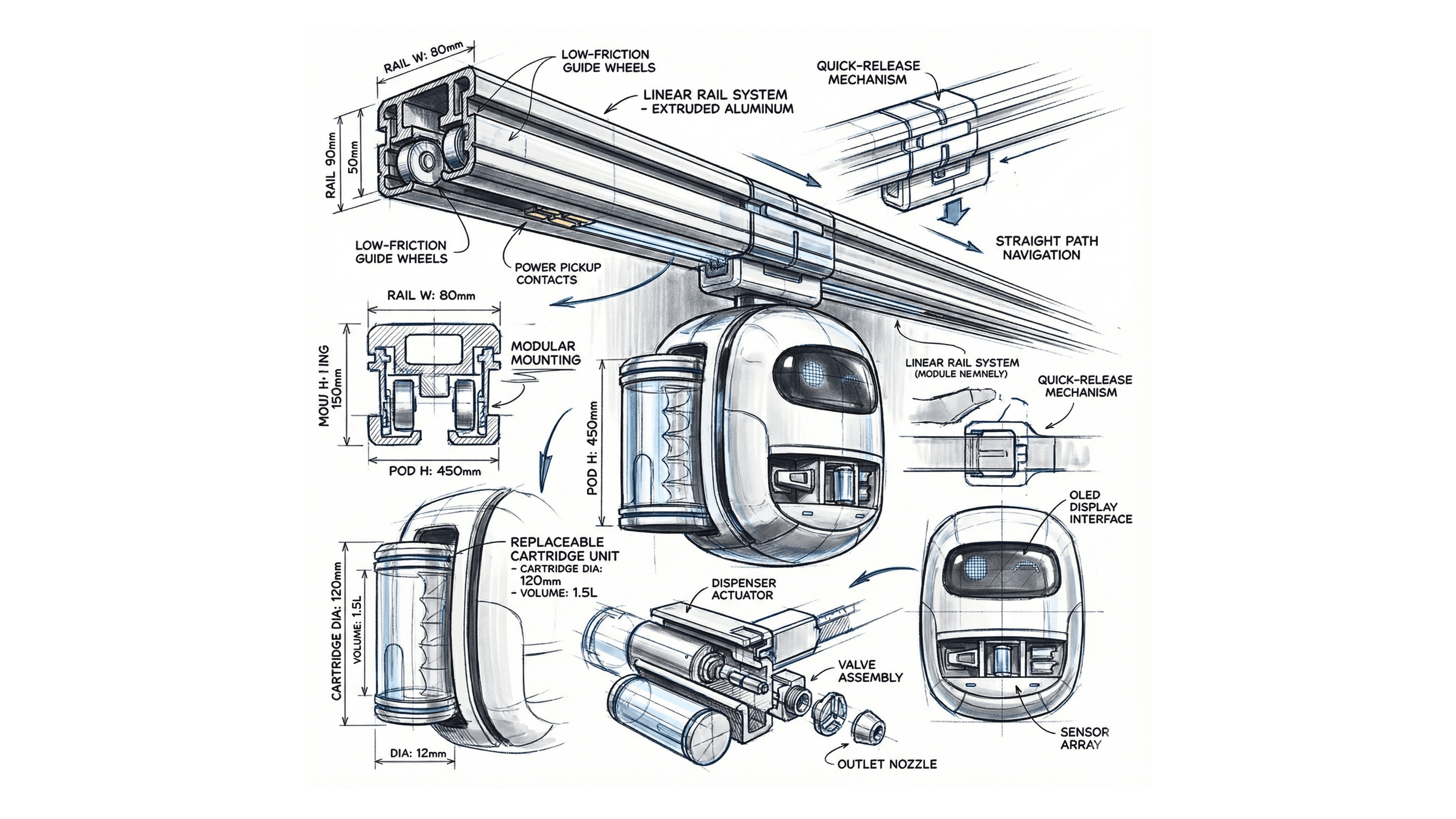
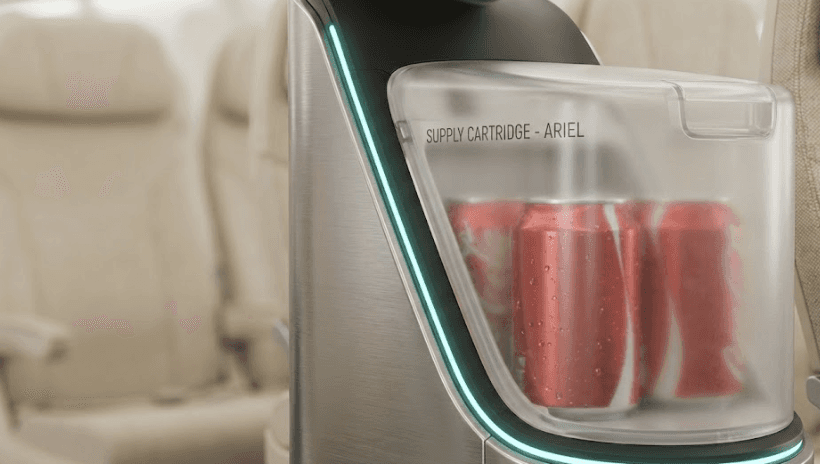
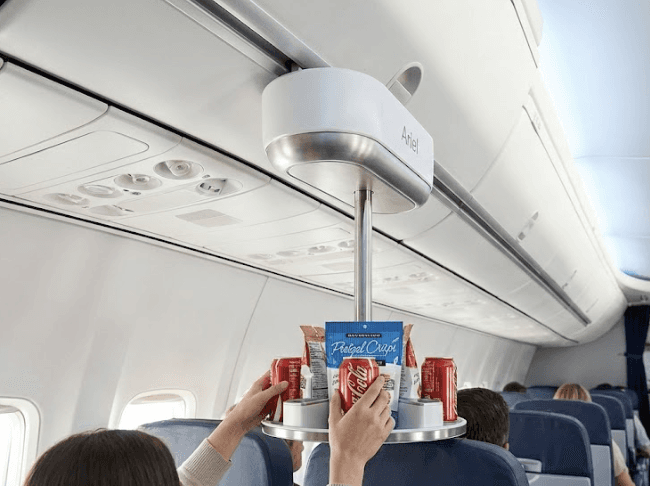
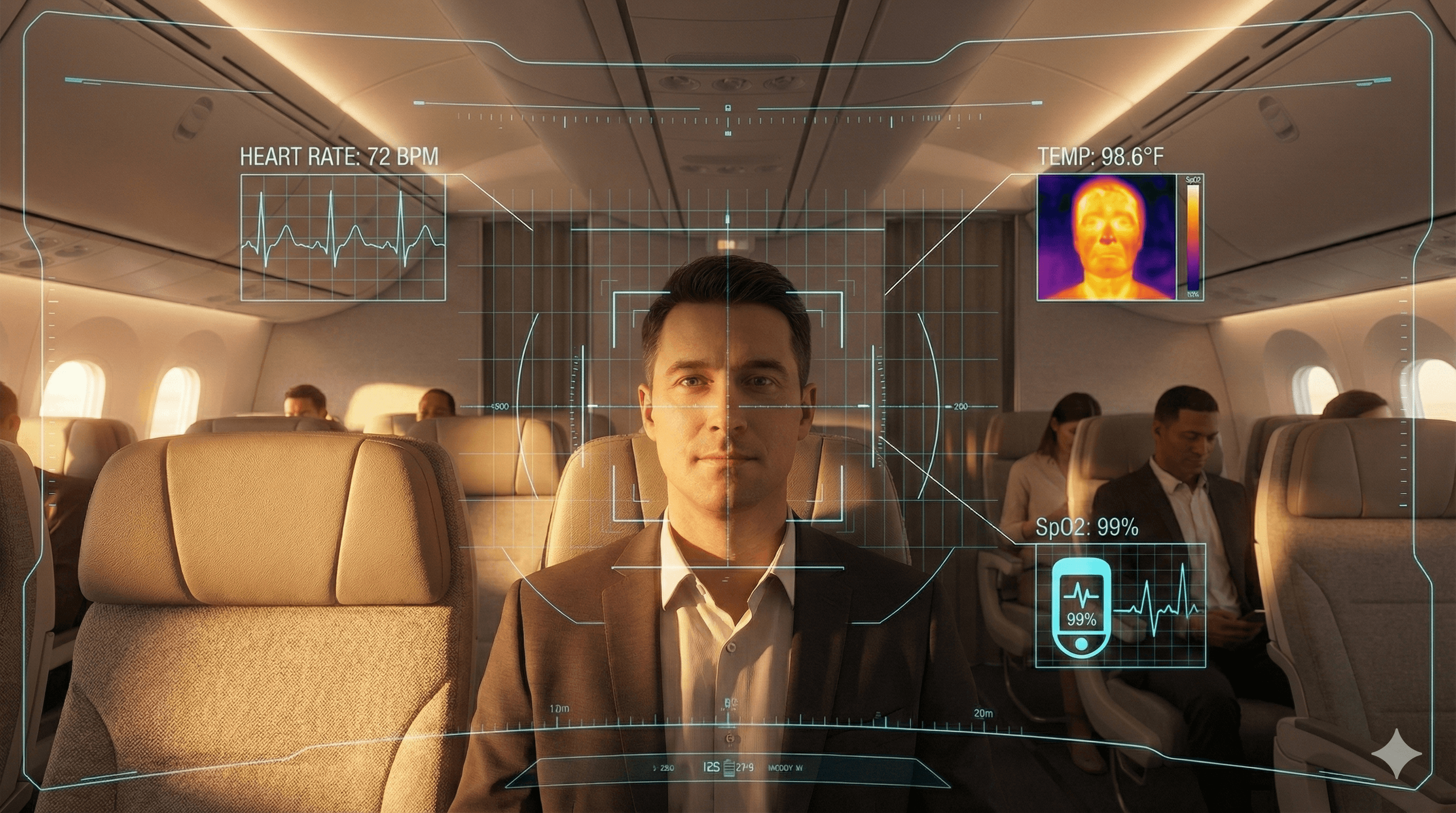
The resulting design is Ariel, a ceiling-mounted rail robot that bypasses aisle clutter and ensures mechanical stability during severe turbulence. Integrated with an automated high-density galley, Ariel retrieves and delivers meals on demand, eliminating heavy trolleys. Beyond logistics, the system serves as a "Medic in the Sky," utilizing thermal cameras and rPPG sensors to perform contactless biometric monitoring and transmit clinical-grade vitals to ground support during medical emergencies.
Why should Ariel contain such biometric features? Aviation regulations (FAA 14 CFR 121.391) require human flight attendants primarily for safety, not service. You cannot simply remove humans without proving the aircraft is safer with the robot than without it. A human flight attendant cannot see a heart rate or blood oxygen level; they can only guess based on how a passenger looks. By equipping Ariel with rPPG sensors (remote photoplethysmography), the robot offers a clinical capability that human crew lacks.
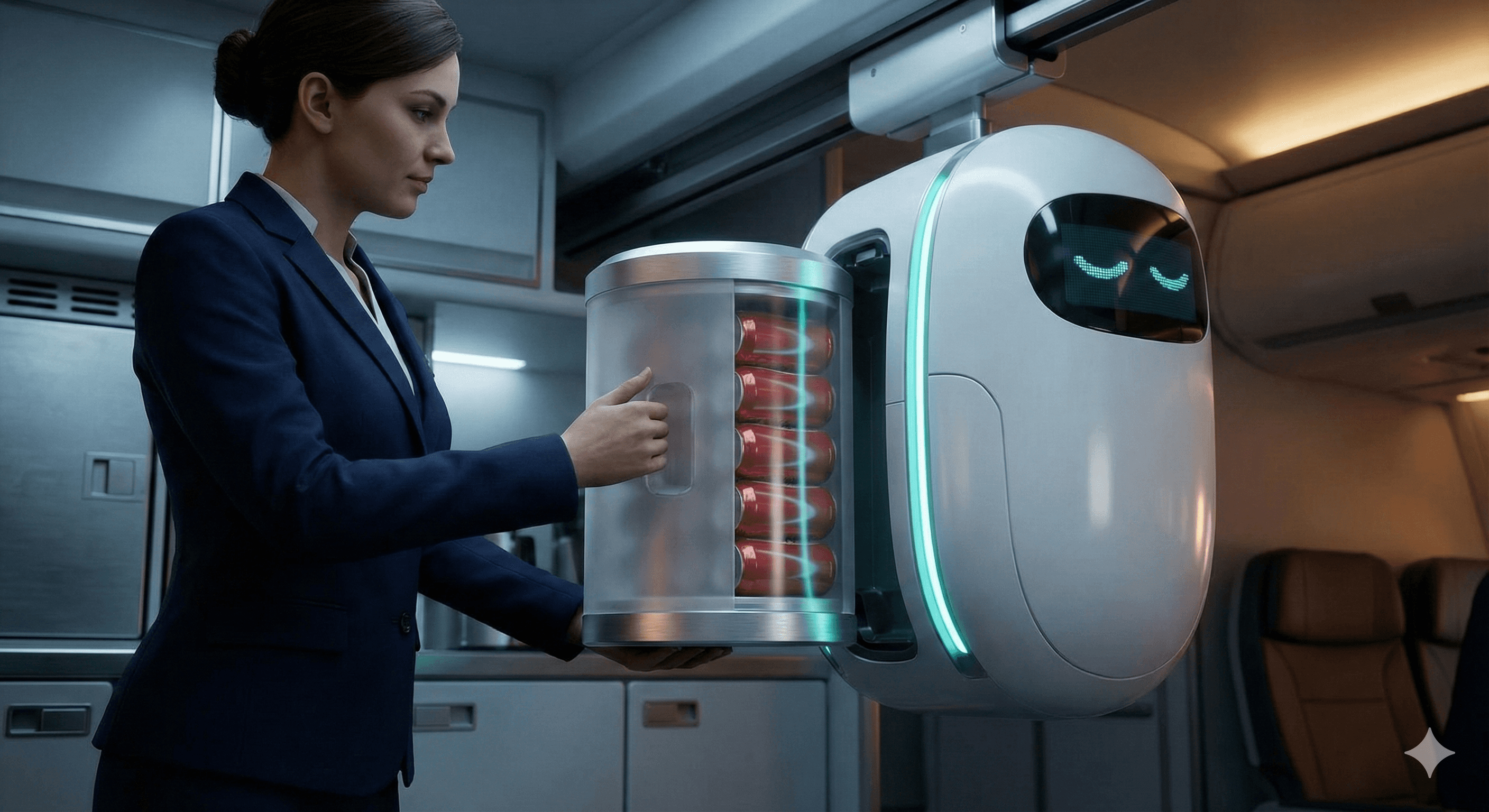
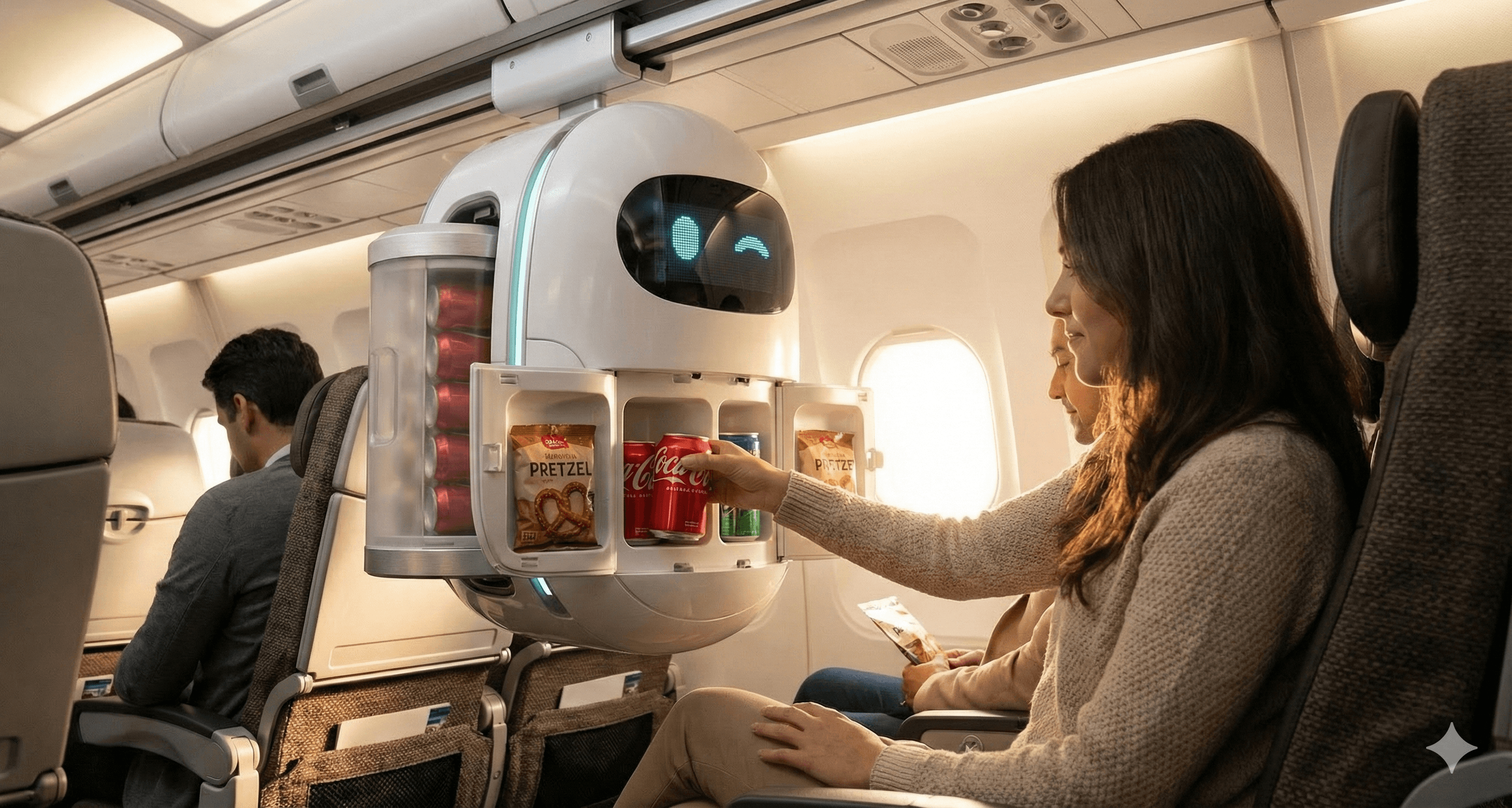
Moving forward, the roadmap for Ariel focuses on regulatory validation. The immediate next step is to test the rail architecture in cargo aircraft environments, which allows for the accumulation of flight hours needed for certification without passenger risk. Future iterations will explore the "Spacemind" concept—integrating Ariel into fully modular cabin interiors that can reconfigure seats and privacy partitions dynamically.
Works Cited
CAE. (2025). Aviation Talent Forecast 2025-2034.
Formant. (2025). Best Practices for Implementing Robots in the Hospitality Industry.
Cornell Law School. 14 CFR § 121.391 - Flight attendants.
Leff, G. (2025). Aeroflot Tests Humanoid Robot as a Flight Attendant. View from the Wing.
Patsnap. Patent US20180370634A1: Airliner overhead meals delivery.
ResearchGate. (2025). Design of an Automated On-Demand Meal Delivery System.
Semantic Scholar. (2025). Agile mobile robotic platform for contactless vital signs monitoring.
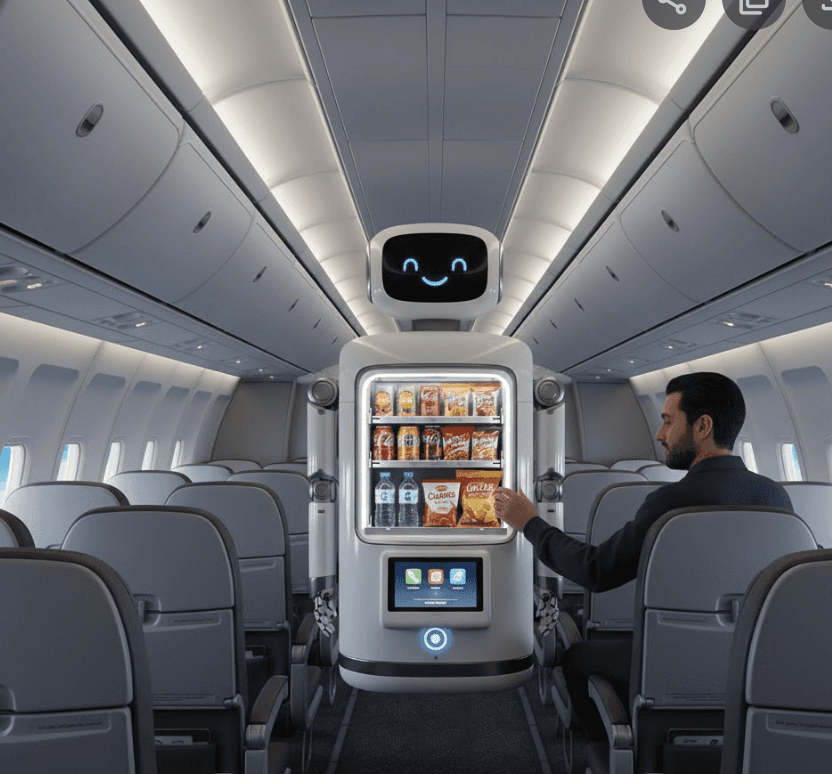
Several images in this piece were created using artificial intelligence, specifically Gemini and Perplexity. Below you will see several variations of "Ariel" the robot. Many of which, obviously, do not work.