Small rescues. Your story.
Make every
rescue count.
See the good you’ve done.
Get a little thank-you for coming back.
The starting point
Keep the good find. Add the follow-through.
- From the app
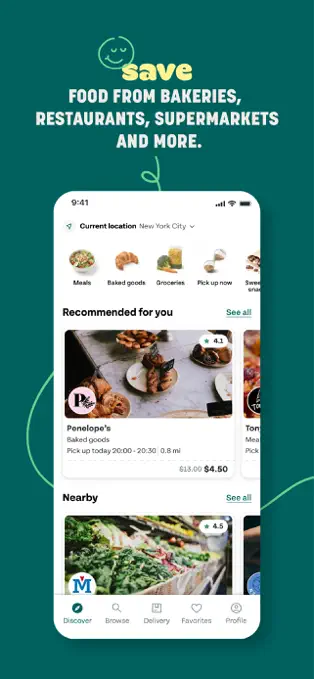
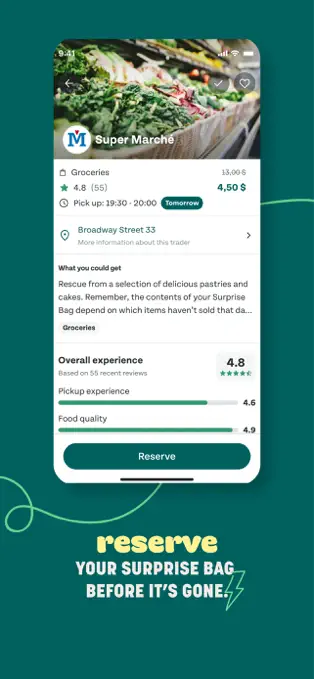
- Discover, Surprise Bags, pickup windows, favorites, and impact tracking.
- My addition
- A connected rescue history, a clearer impact receipt, and a proposed points-and-rewards experience.
The concept keeps the app’s teal, rounded cards, and familiar navigation.
Why this product
A sustainable choice that feels like a good find.
I love that Too Good To Go makes rescuing food accessible, affordable, and a little surprising. I wanted that feeling to last beyond pickup.
The app already tracks your impact. Rescue Rewards explores how that story could connect to your past rescues and give you a reason to return.
01 / Your rescue story
Small rescues.
A bigger picture.
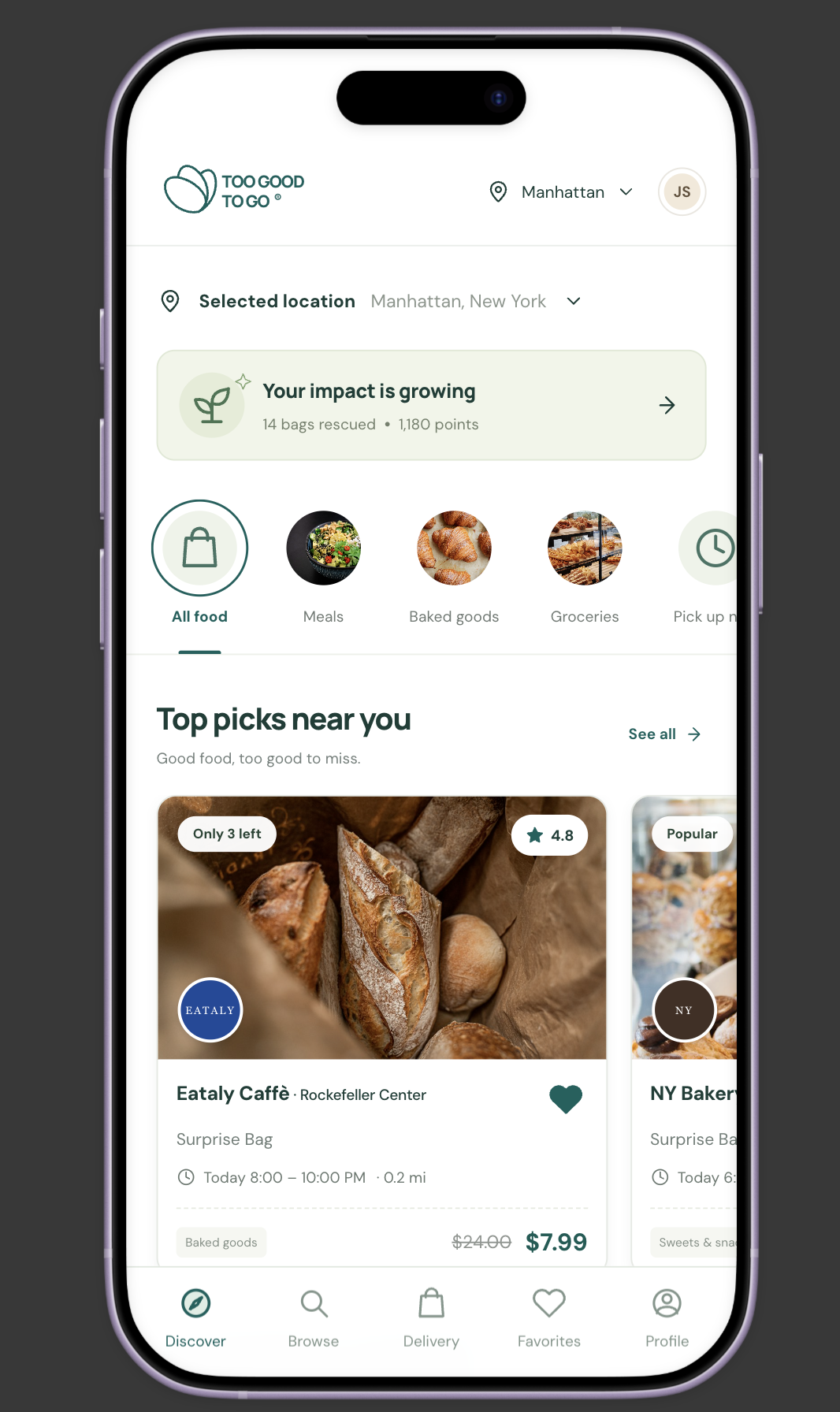
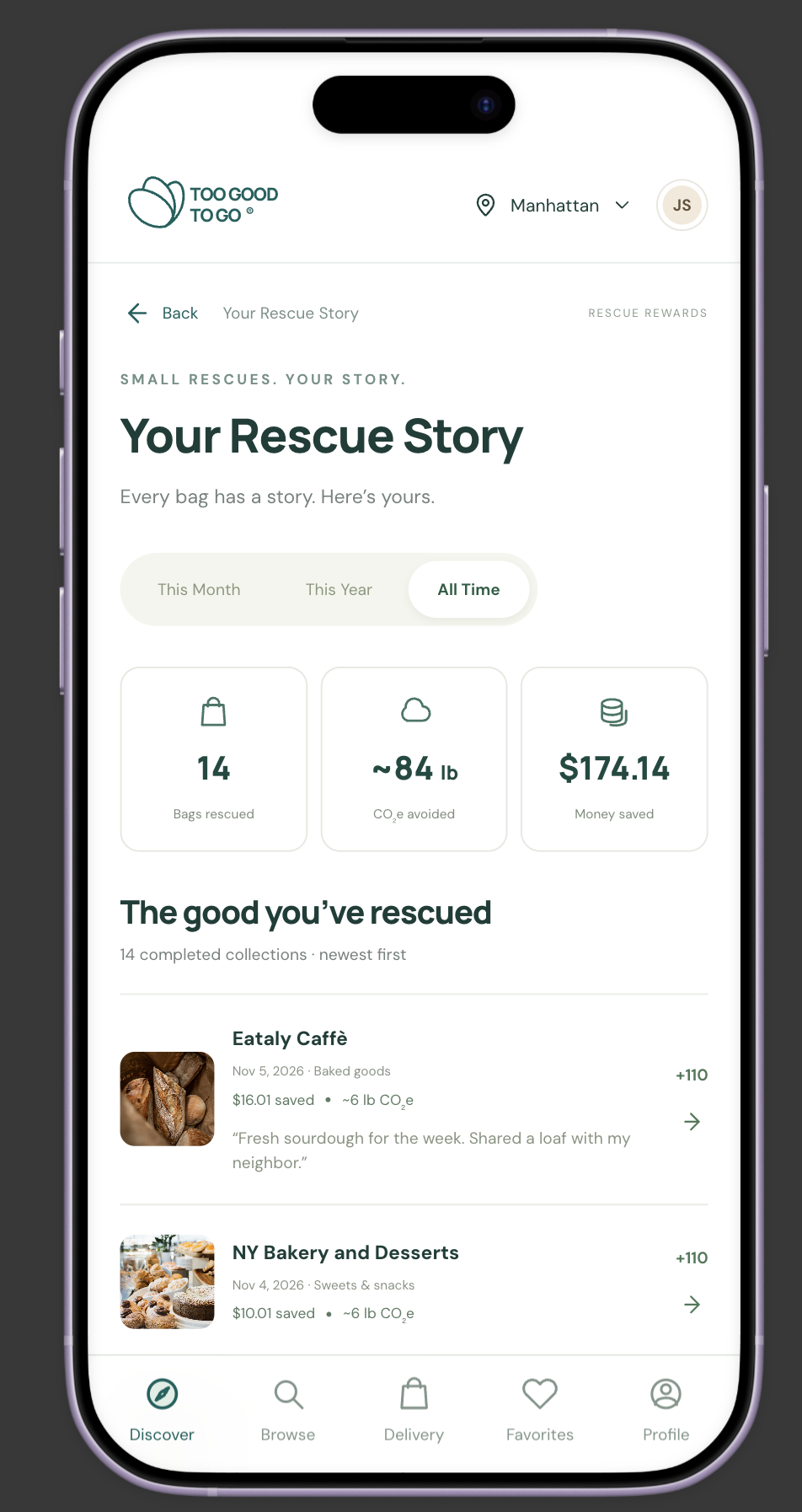
An impact shortcut in Discover leads to a history of completed collections. Switch between this month, this year, and all time, then open an individual rescue.
02 / The impact receipt
Give each rescue
its own story.
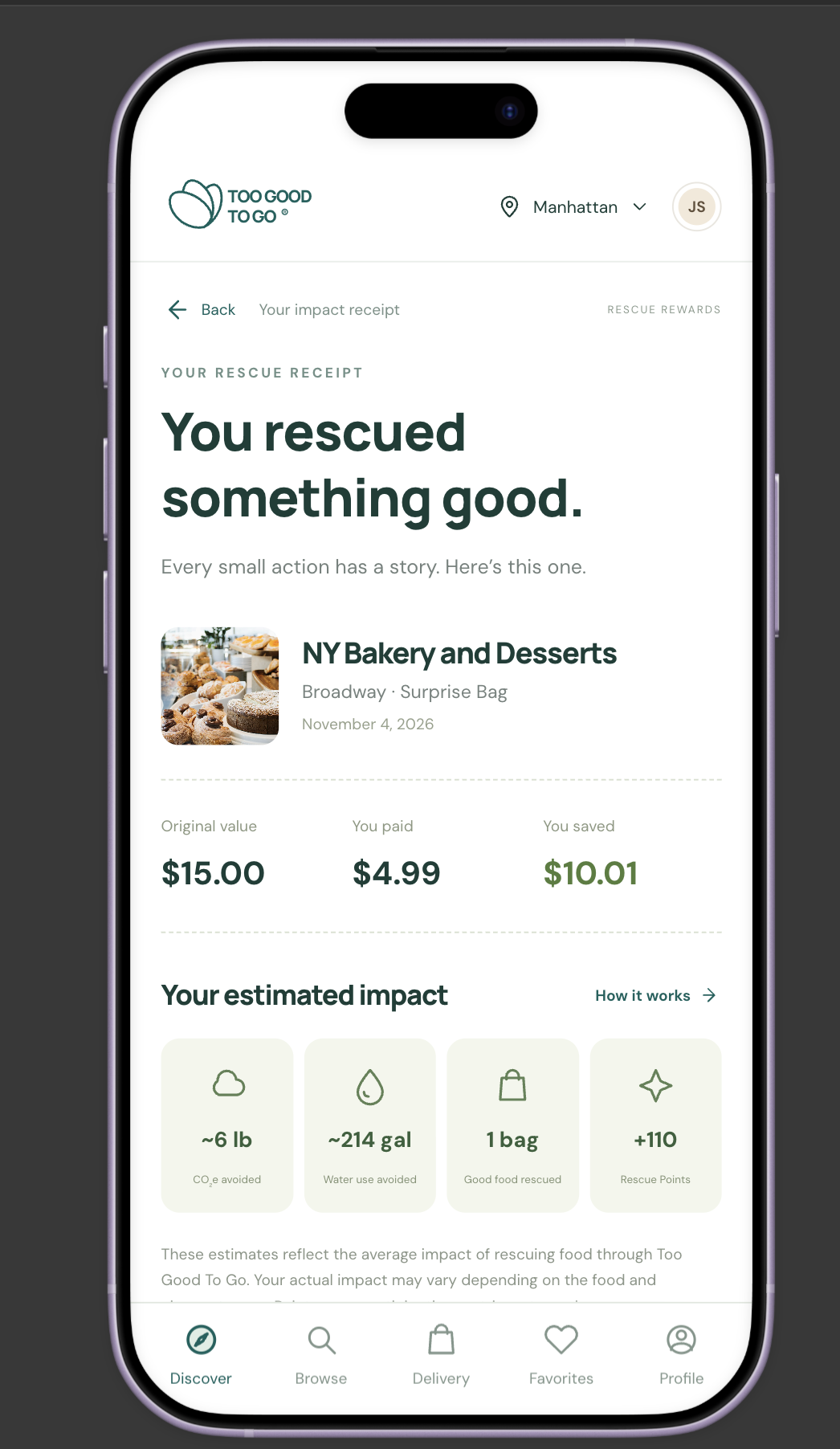
The receipt brings the store, price, savings, and estimated environmental impact together. A “How it works” link makes room for the calculation behind the numbers.
Environmental figures are averages, not measurements of the food in a specific bag. The values shown are prototype examples.
03 / Rescue Rewards
A little thank-you
for a little good.
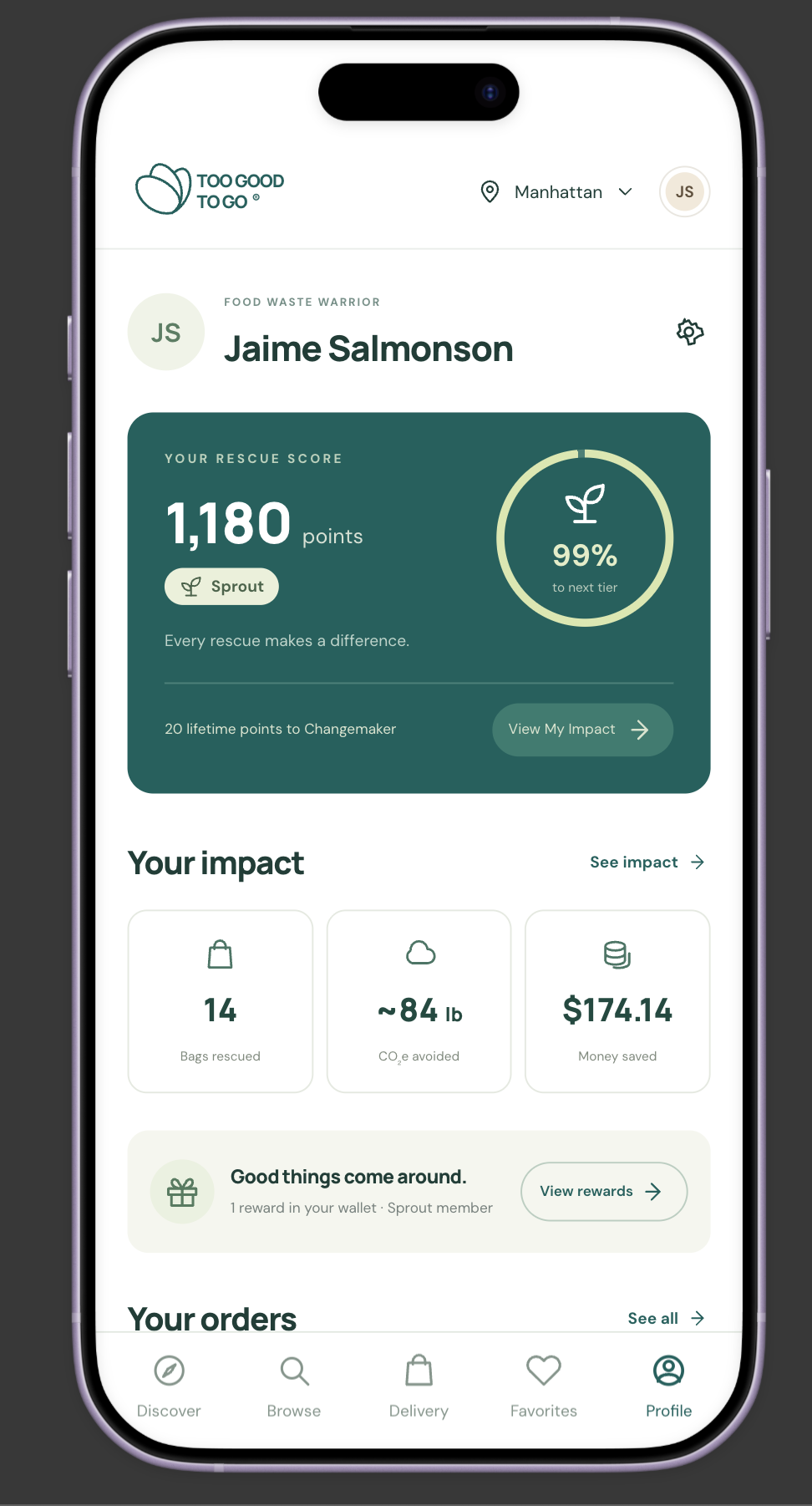
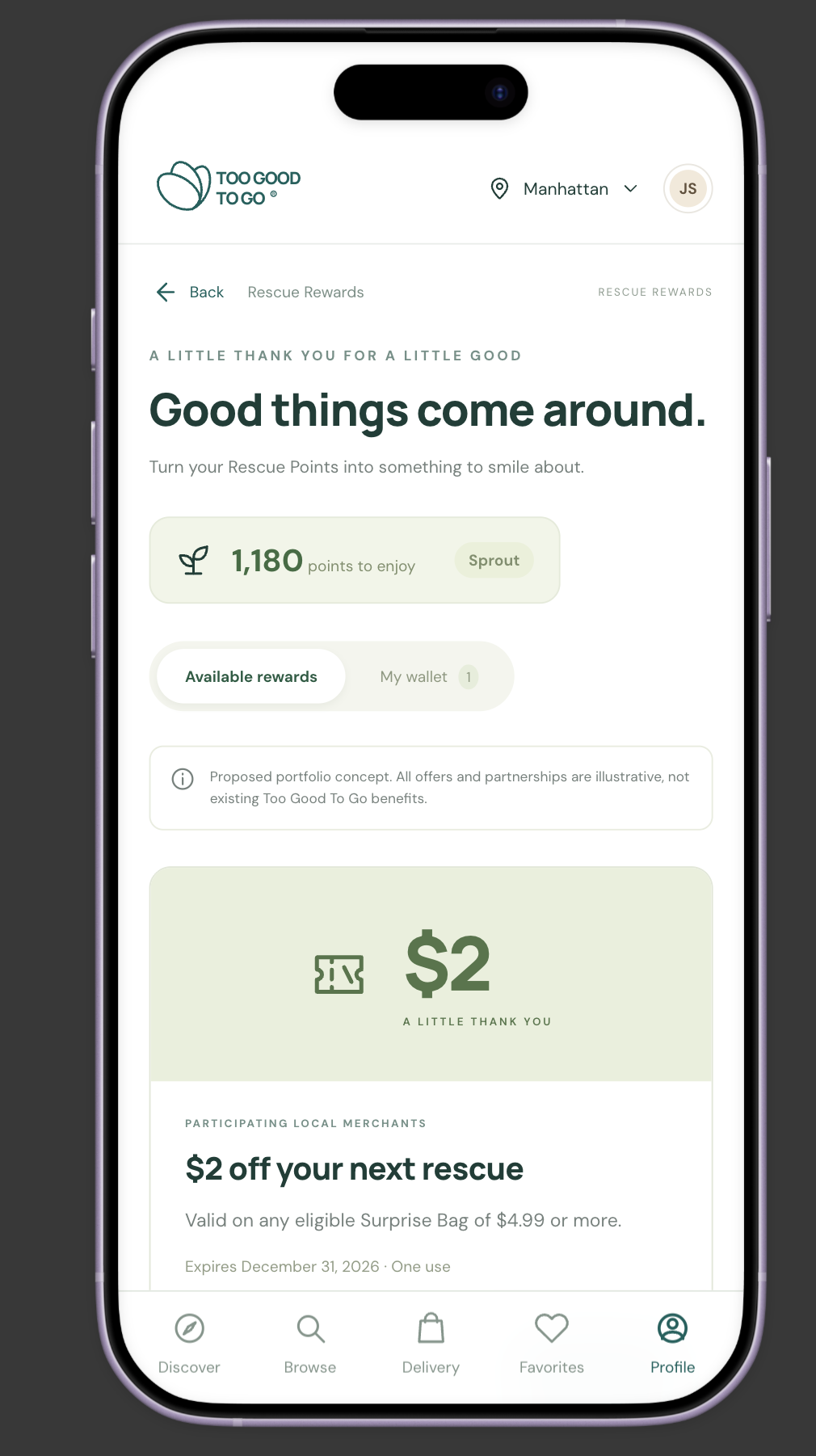
The profile connects points, tier progress, and a rewards wallet. Available rewards show their cost and eligibility before redemption.
04 / Before redeeming
Make the terms
easy to find.
Point costs, minimum spend, expiry, and tier requirements appear on the reward. Locked rewards explain the requirement.
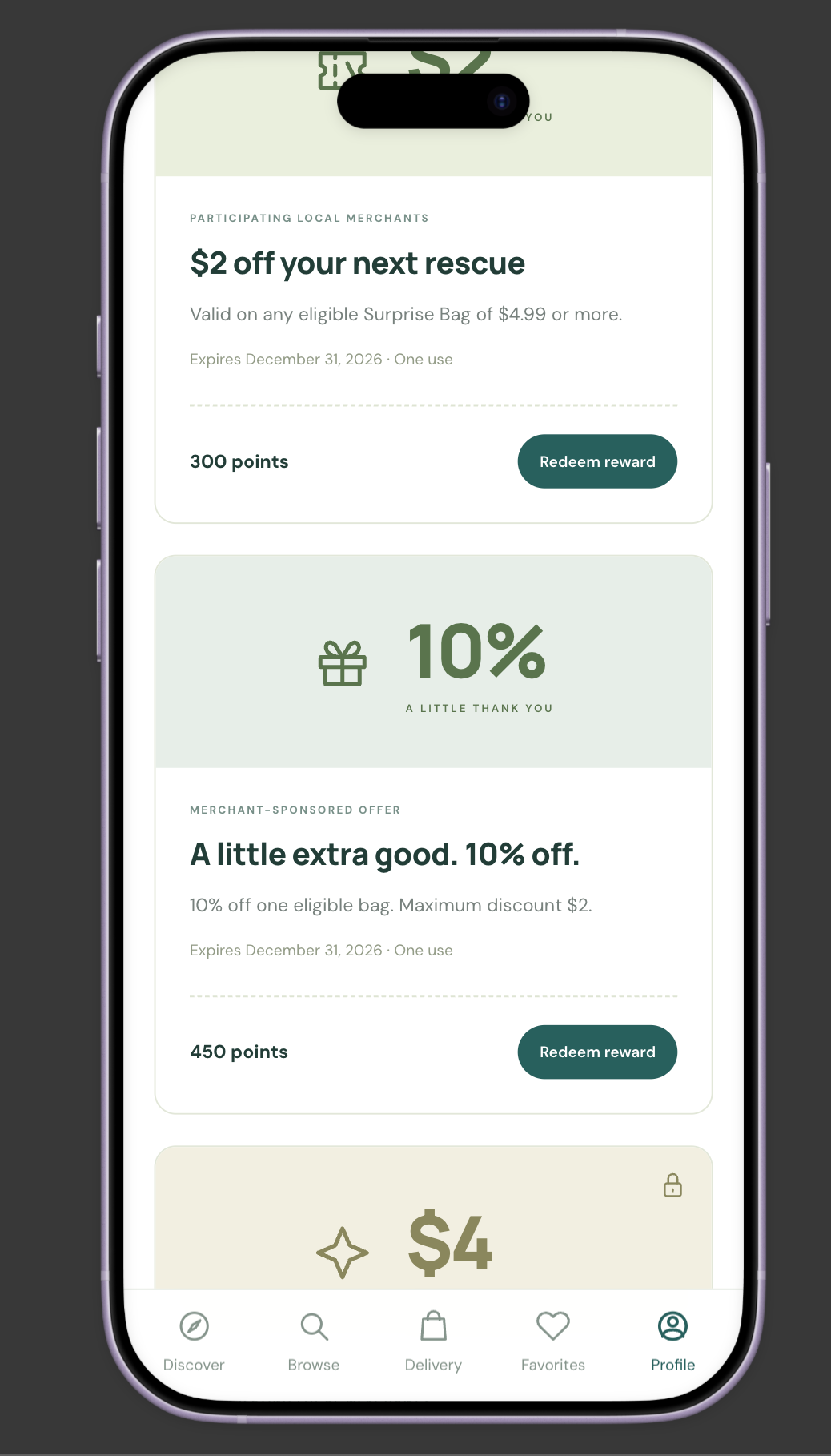
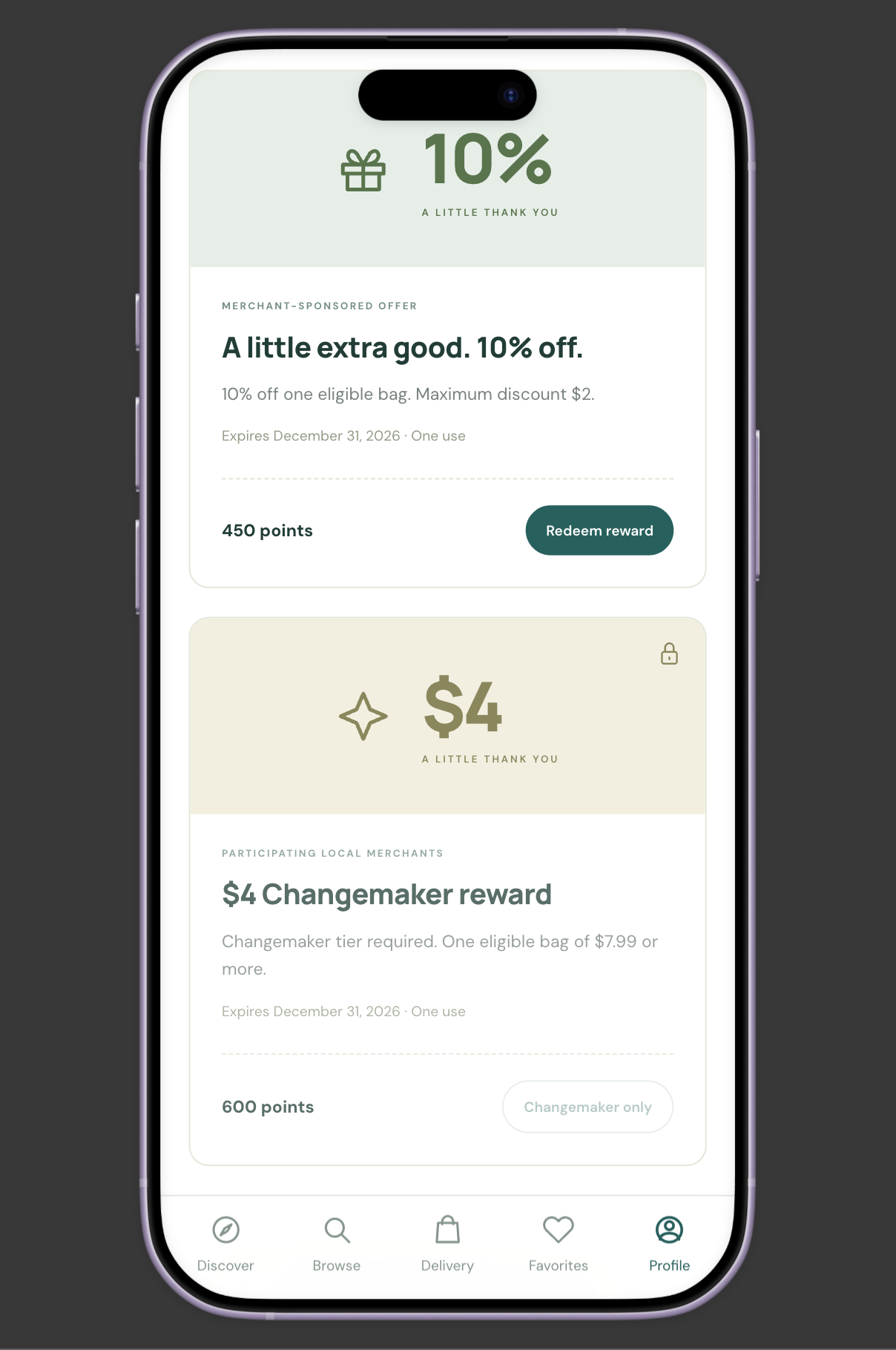
All offers, point values, tiers, and partnerships are illustrative proposals.
Explore the concept
Follow the rescue.
Discover → Your Rescue Story → impact receipt. Or open Profile to explore points and rewards.
Open prototype in FigmaFigma access may be required. The screens above show the concept in full.
Design choices
Keep the good
easy to understand.
Discover and Profile are the entry points. The proposal builds on the existing navigation.
Show how impact is calculated. Points track reward progress; they are not a measure of carbon saved.
Give rewards a clear cost and explain eligibility before someone spends their points.
What’s next
What I’d test first.
- Can people find their rescue history and explain the impact estimates in their own words?
- Are point balances, tiers, and redemption conditions clear?
- Do rewards support useful repeat rescues without encouraging people to buy food they won’t use?
Decision signal: Test the flow first. Then compare completed repeat collections, food use, and reward cost before deciding whether incentives help.
This is an independent design concept. Interviews, usability testing, and measured results have not been completed.
Research & project notes
Too Good To Go already offers impact tracking in Profile. Rescue Rewards is a proposed extension, not a claim that impact tracking is new. Rewards and partner offers in these screens are illustrative.
The impact receipt uses example figures. Too Good To Go’s published environmental methodology uses average Surprise Bags and model assumptions; actual bag contents and outcomes vary. A production version would need verified calculations, accessible labels, and an agreed rewards model.
- Too Good To Go: Existing app flow and impact tracking
- Too Good To Go: Impact methodology
- Jaime’s Rescue Rewards prototype
Official product context checked November 6, 2026. Public app images are credited above. The seven concept screenshots were supplied by Jaime and are displayed unchanged. The Figma file was not accessible through the connected account, so this page presents the supplied screens with a prototype link.