Motivations
College campuses are full of underused clothing. Students move frequently, change styles quickly, and often lack the time or transportation to donate or resell items through traditional platforms. As a result, many perfectly wearable clothes end up in landfills or packed away unused.
I wanted to design a solution that made second-hand shopping feel fast, local, and trustworth.
Research
To understand student habits and attitudes toward second-hand clothing, I conducted:
Informal interviews with students on campus
Competitive analysis of platforms like Depop, Facebook Marketplace, and Poshmark
Key Questions
How often do students get rid of clothing?
Where do they usually sell or donate items?
What stops them from using resale apps?
Would they buy clothing from other students on campus?
1. Convenience is the biggest barrier
Many students said they had clothing to sell but never listed it because the process felt time-consuming or complicated.
2. Trust matters
Students were more comfortable buying from someone at their university than from a stranger across the country.
3. Local pickup is preferred
Most students preferred quick, in-person exchanges instead of shipping.
4. Price sensitivity is high
Students wanted affordable clothing but still expected a clean, modern shopping experience.
Design Goals
Based on the research, I defined four primary design goals:
Make listing an item take under one minute
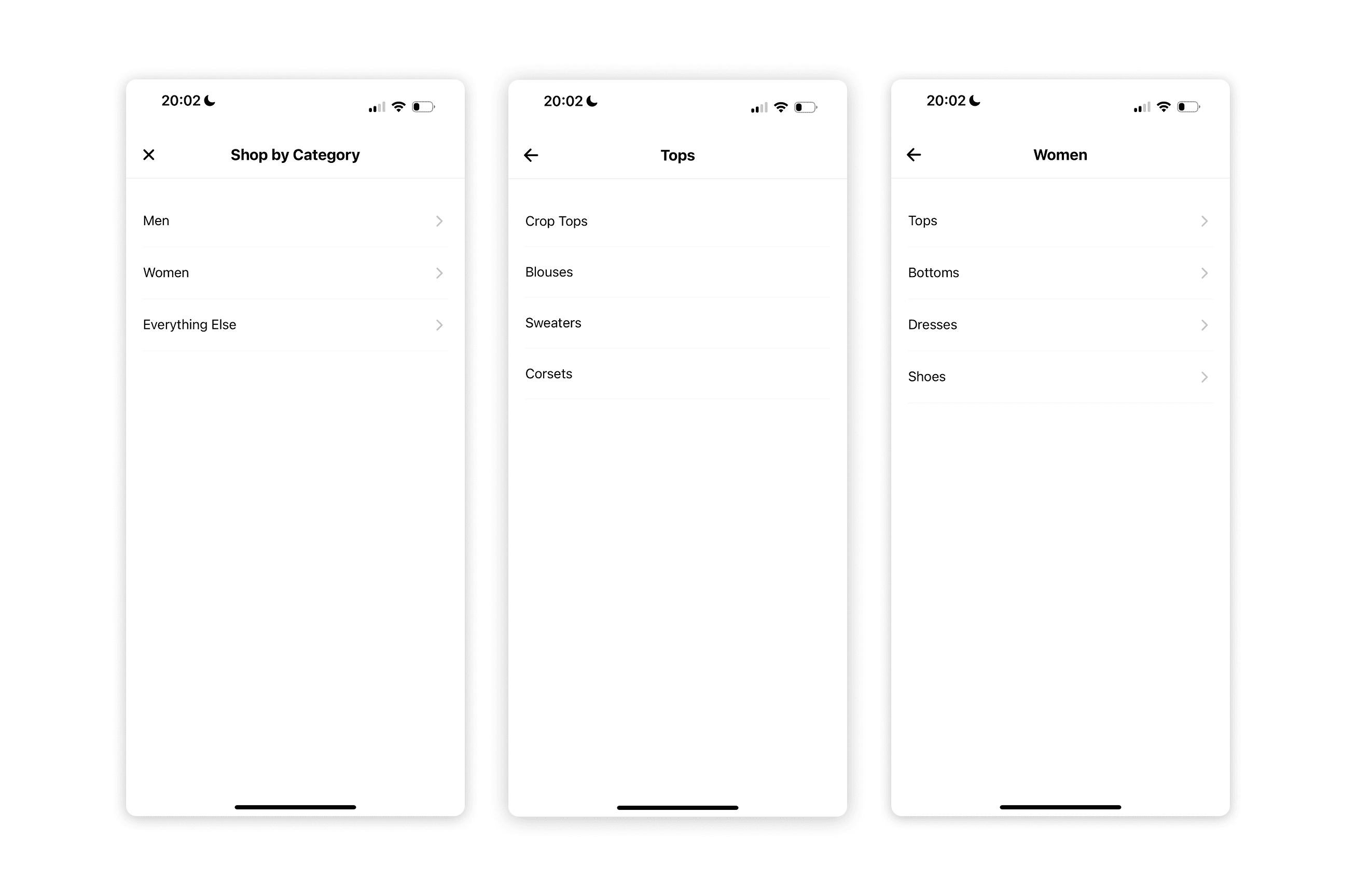
Keep the interface minimal and familiar
Prioritize local, campus-only interactions
Create a clean, modern visual language
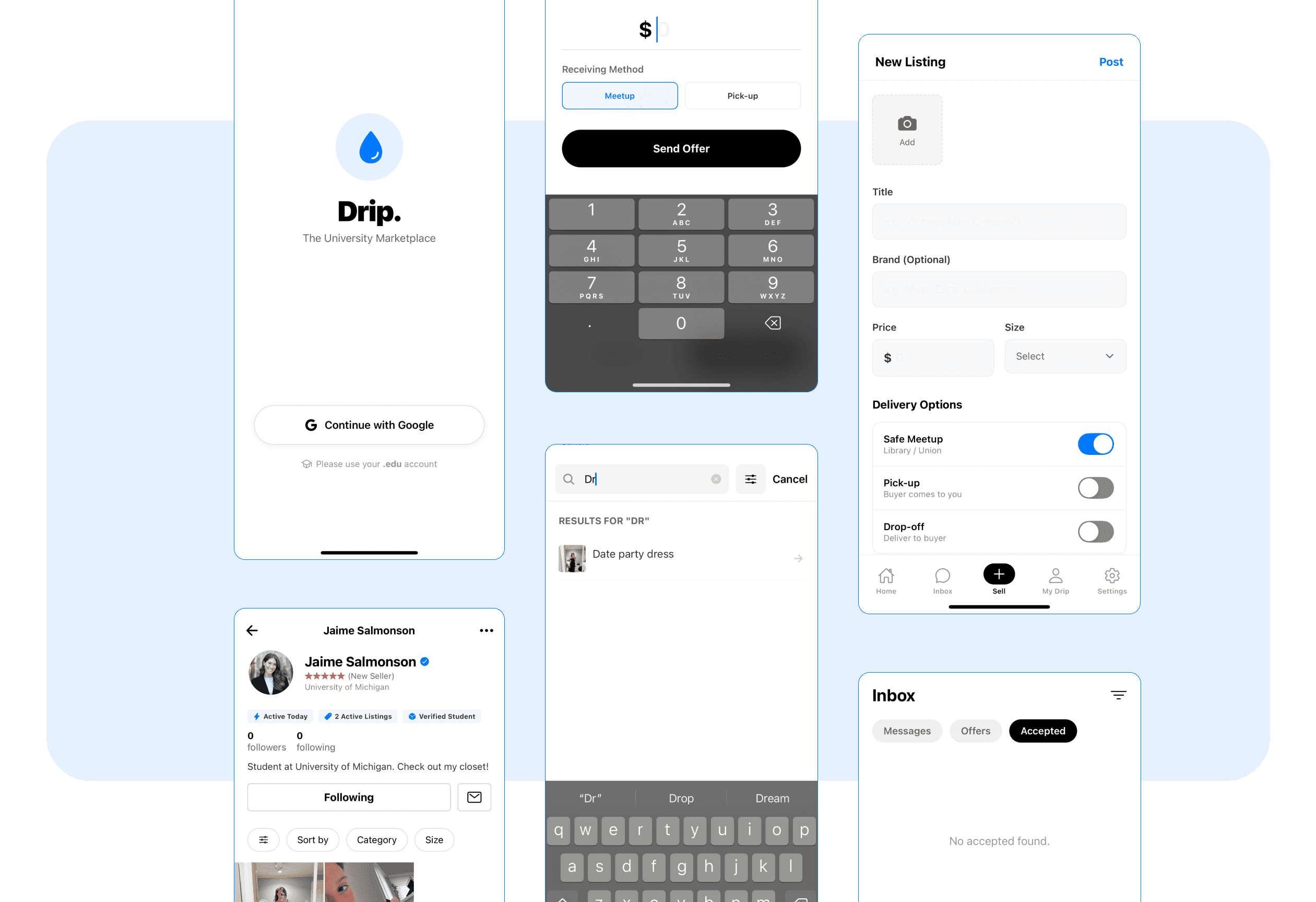
Final Design
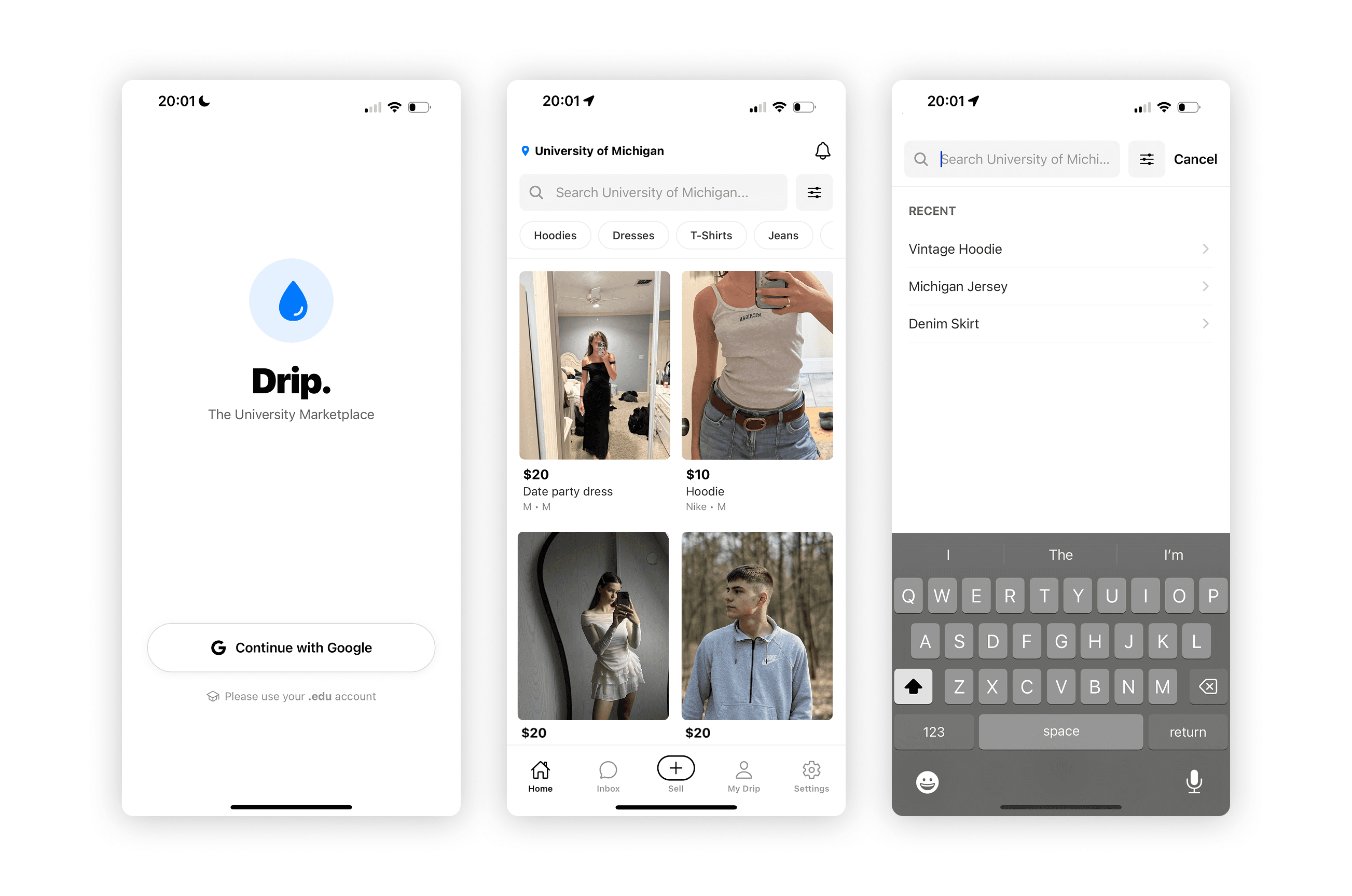
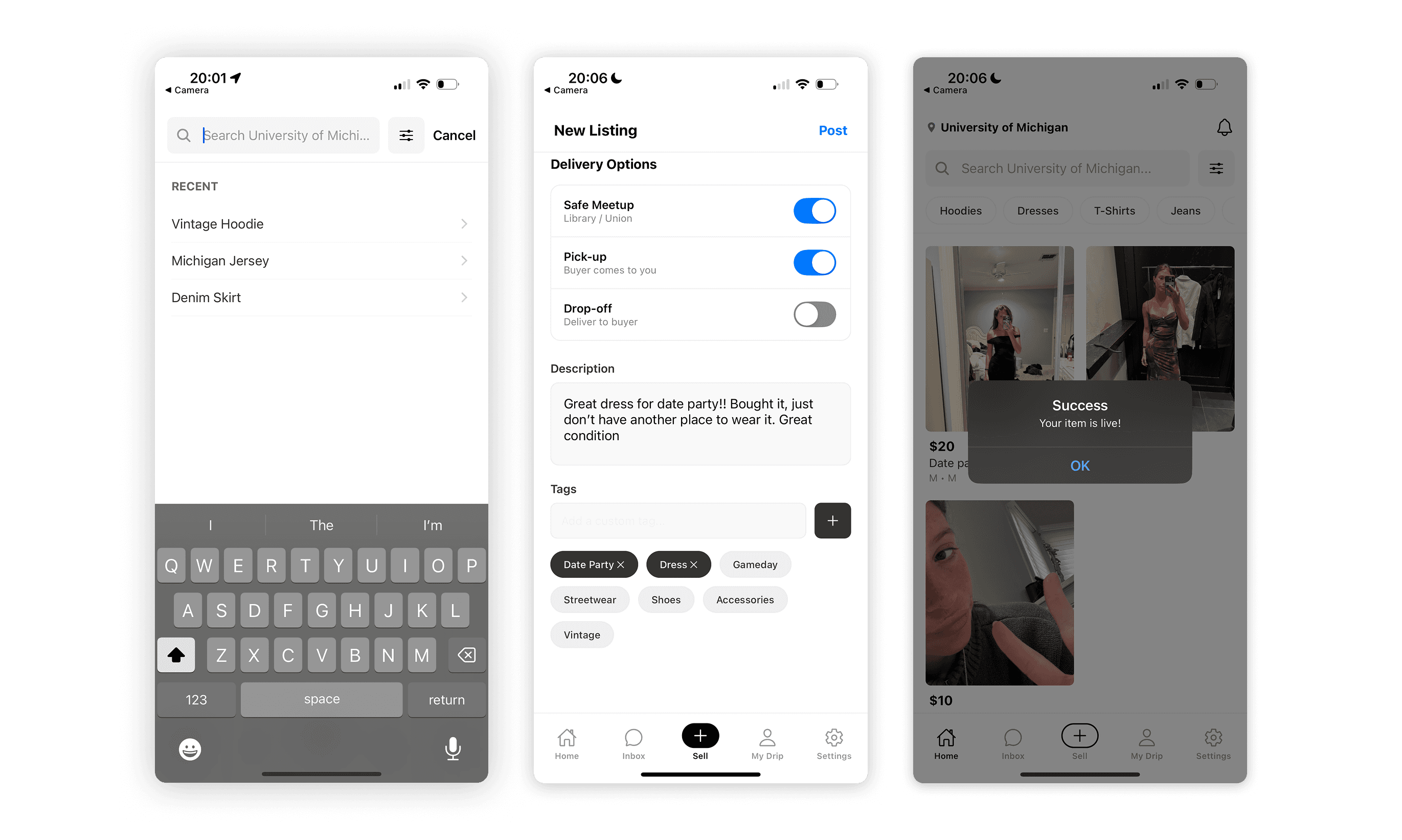
1. Home + Search
A simple feed of nearby listings with quick search and filter options.
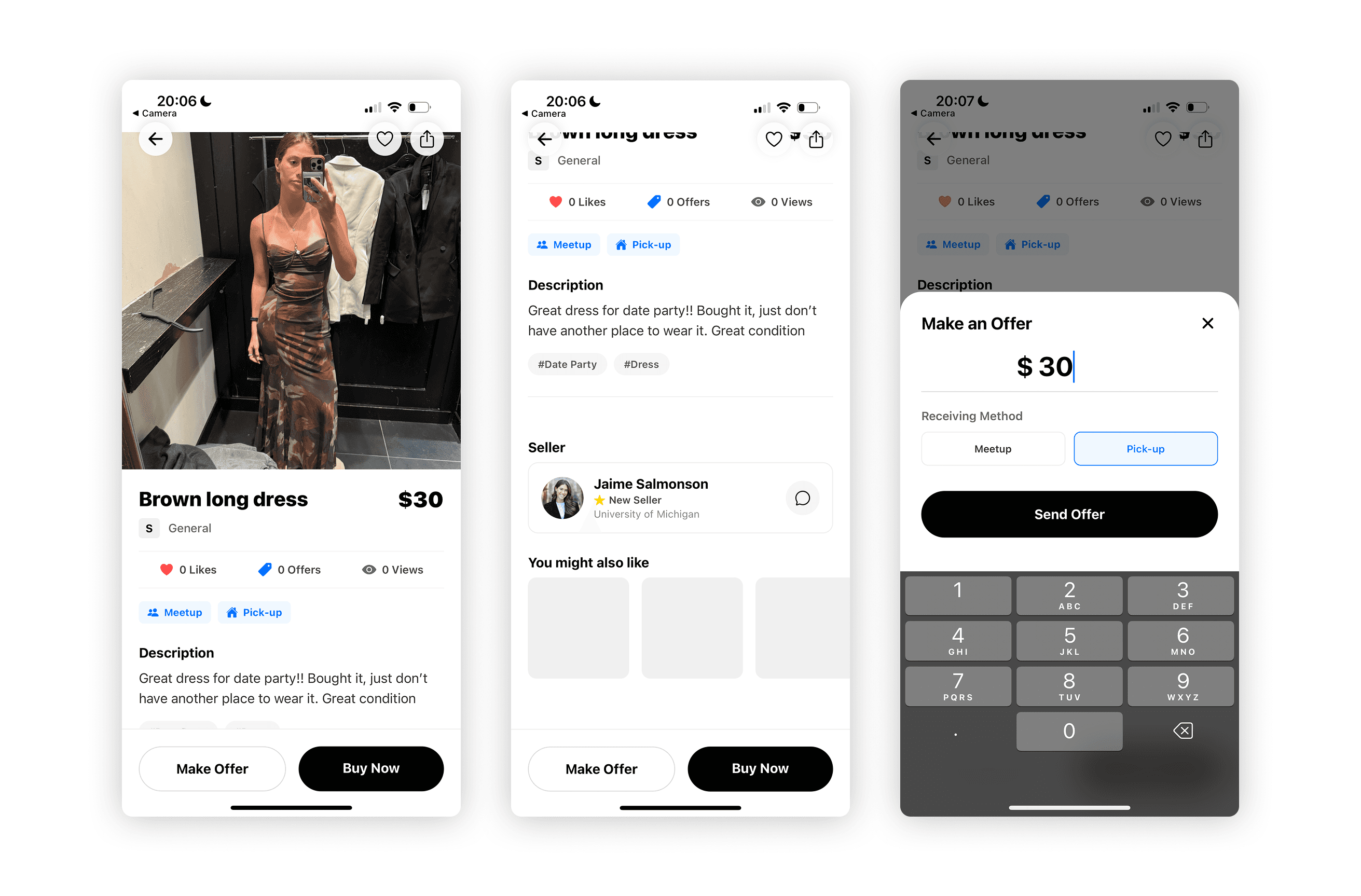
2. Item Detail + Offers
Users can view an item and send a custom offer in seconds.
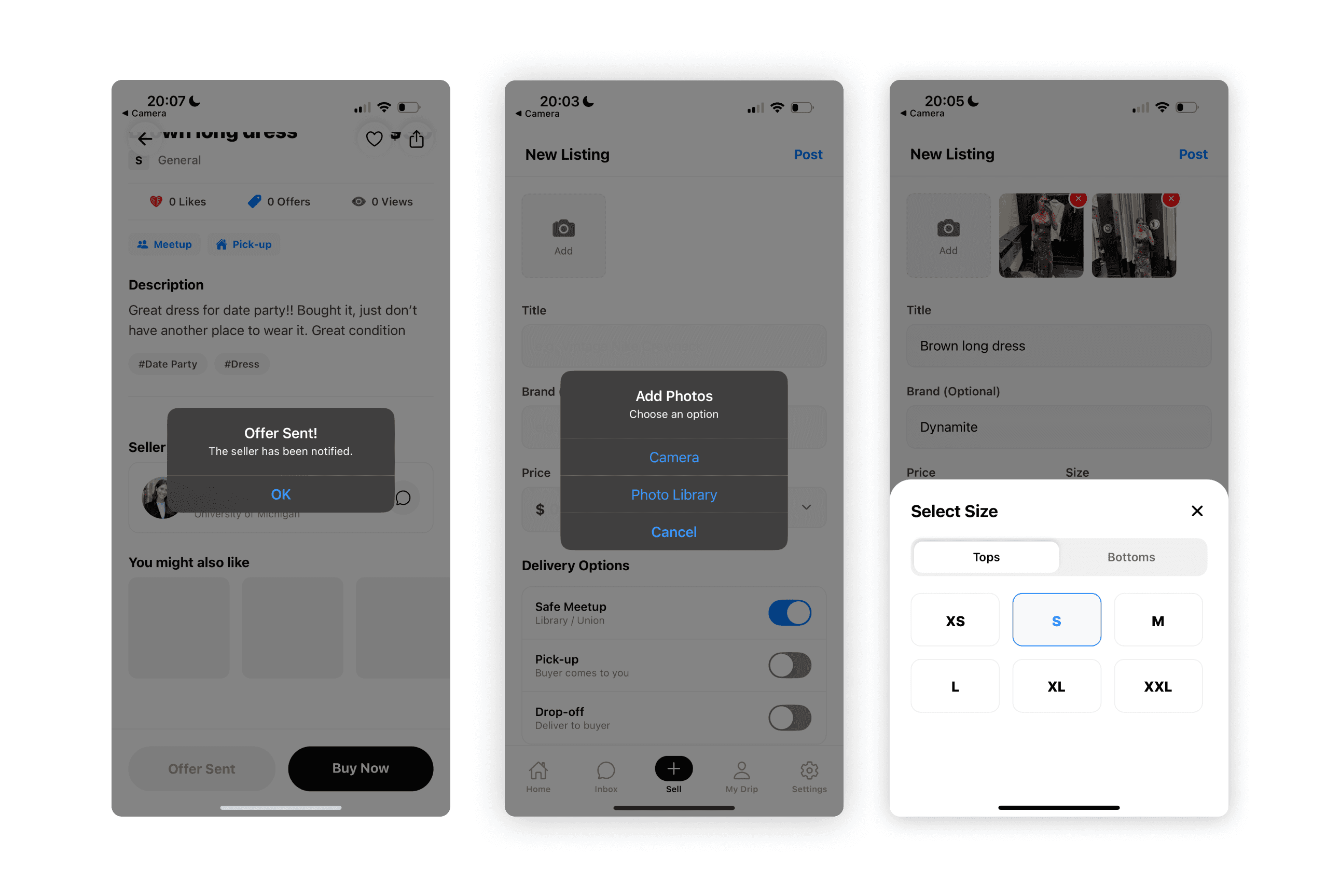
3. One-Step Posting Flow
A streamlined listing process focused on speed and clarity.
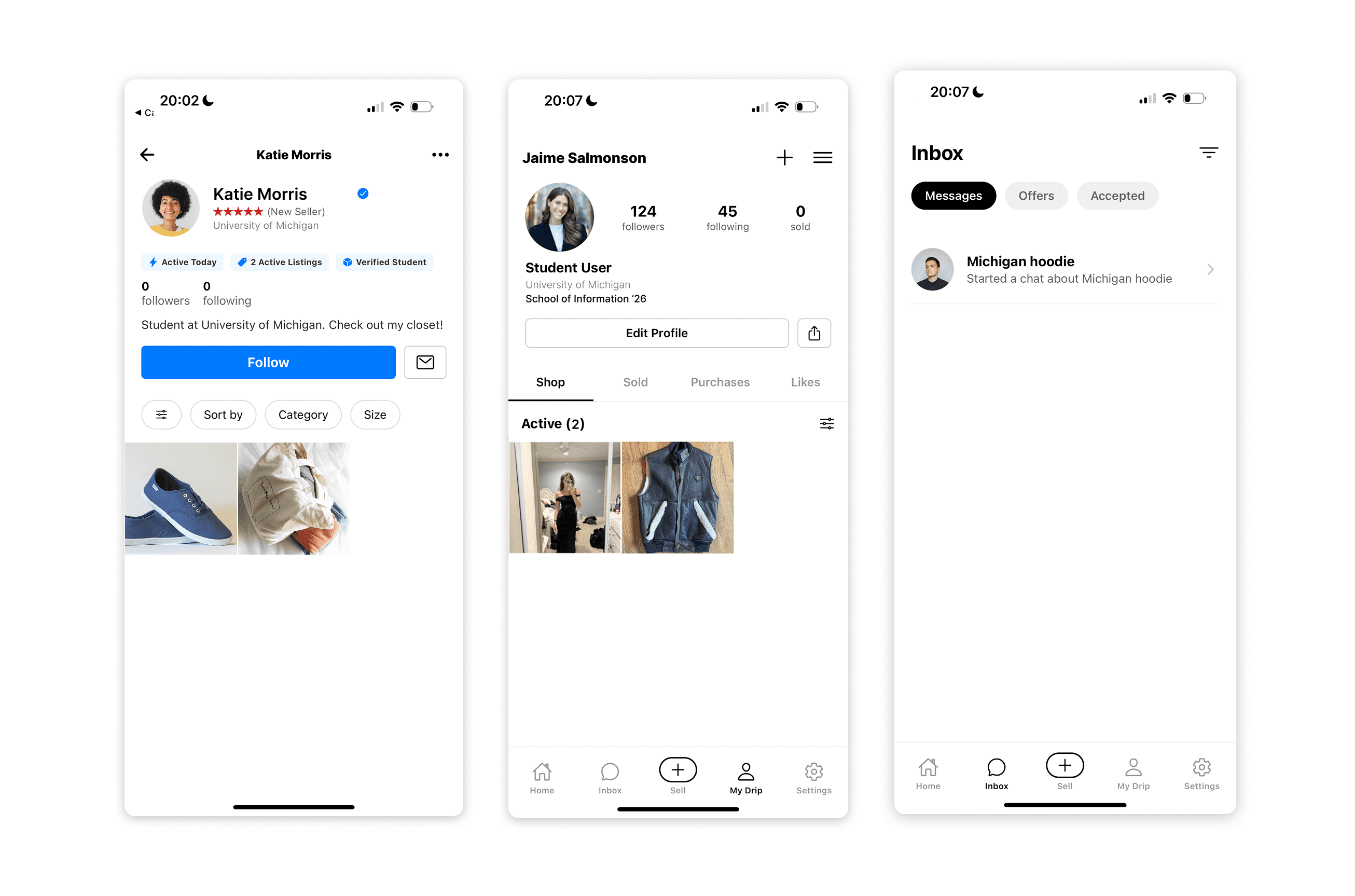
4. Profile and Messaging
Basic profile and inbox features to coordinate local exchanges.
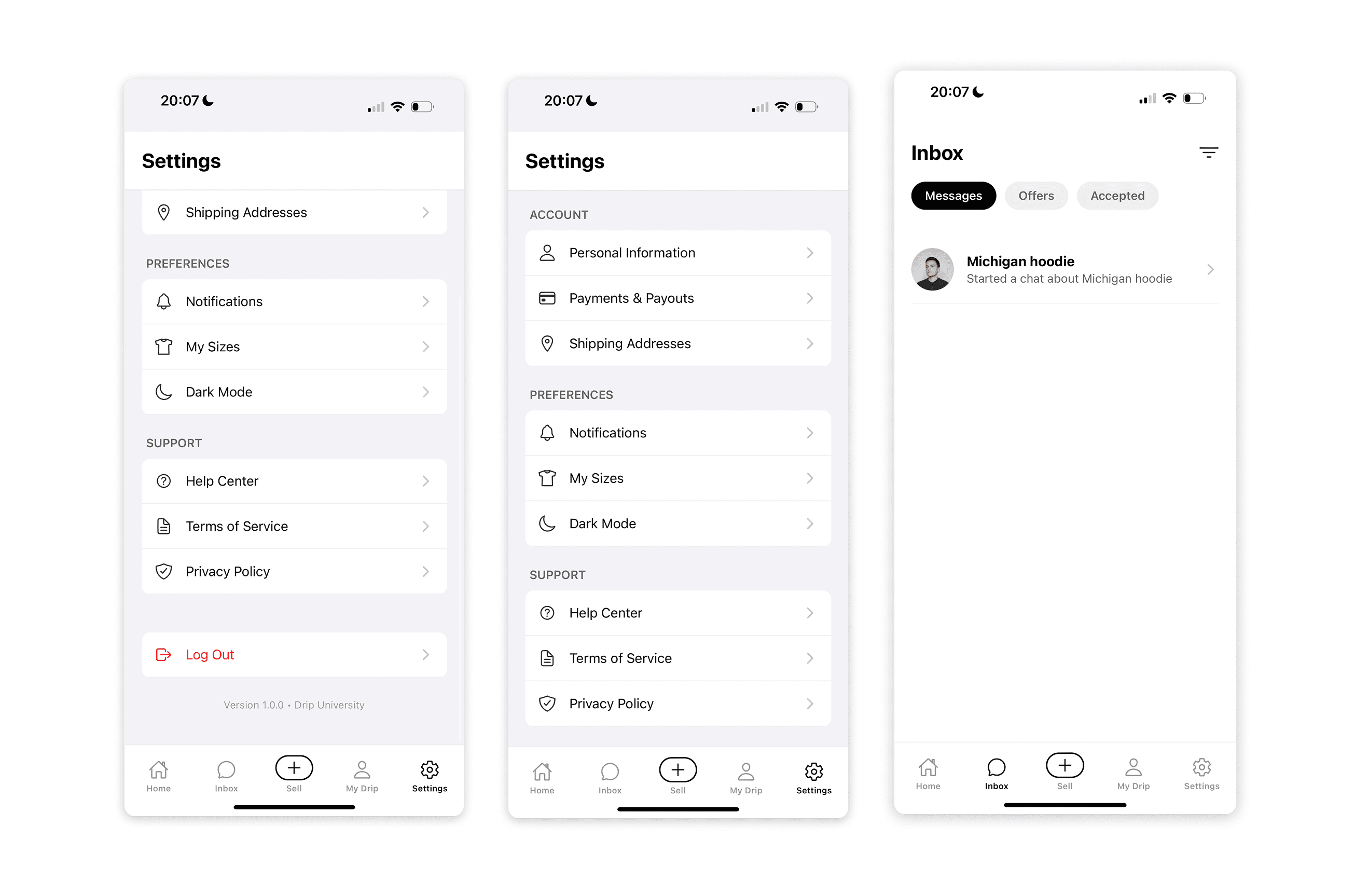
The interface uses a neutral color palette, simple typography, and clear spacing to create a calm, modern shopping experience.
Reflection
This project reinforced the importance of designing for real-world behaviors rather than ideal scenarios. Students didn’t need more features—they needed something faster, simpler, and more local.
By focusing on convenience and trust, Drip turns sustainability into a natural byproduct of everyday use.